A data-driven analysis of onboarding qualification mechanisms across the CX landscape
Central Thesis: Companies are choosing between low drop rates and strong lead quality — the best CX onboarding flows work around making hard choices on it.
The Problem
Most CX teams treat drop rates and lead quality as competing priorities. Our observation shows they don’t have to be. The platforms analysed here attempt to solve both simultaneously — not through better UX, but through deliberate onboarding architecture.
The core issue simplified are:
- Flows that front-load friction lose users before value is delivered
- Flows that remove all friction flood the pipeline with unqualified leads
- The best flows embed qualification into the onboarding experience itself
Three qualification mechanisms drive everything that follows:
- Identity gate — validates who the user is before they proceed
- Commitment filter — requires the user to put something at stake
- Intent signal — collects data that only a serious buyer would provide
- Passive filter — product positioning screens out non-target users upstream
The 6 Companies — Comparison Matrix
Each company has made a deliberate choice about which mechanism fits their buyer profile. The table below maps that choice across the full group.
| Company | Mechanism | What it does | Gate style | Timing in flow |
|---|---|---|---|---|
| Aircall | Identity gate | Domain validation | Automated | Pre-signup |
| Grasshopper | Passive filter | Geographic service scope | Structural | Pre-signup |
| CloudTalk | Intent signal | Business data collection | Passive | Pre-product |
| KrispCall | Commitment filter | Contact capture (no scoring) | Soft gate | Pre-payment |
| VirtualPBX | Commitment filter | Payment before provisioning | Hard gate | Pre-access |
What the timing labels mean
| Timing label | What it means |
|---|---|
| Pre-signup | Qualification fires before the user creates an account — the domain check or geographic block happens at the very first touchpoint. |
| Pre-product | Qualification happens after account creation but before the user reaches the core product — typically during the setup or profile step. |
| Pre-payment | Lead data is captured before any payment screen is shown — the user is a known contact before any financial commitment is requested. |
| Pre-access | The final gate before product access — either a payment wall (VirtualPBX) or a human review step (Nuacom). Highest friction, highest confidence. |
The earlier the qualification checkpoint, the lower the operational cost of filtering — but the harder it is to execute without also increasing drop rates for the right users. Aircall and Grasshopper solve this at step one. VirtualPBX appears to accept the trade-off deliberately, because in their market, the cost of a bad-fit lead is higher than the cost of a lost signup.
Key observation:
No two companies use exactly the same mechanism. The choice reflects how well each team understands the cost of a bad-fit lead in their specific market.
Company Breakdowns
Aircall — Identity Gate
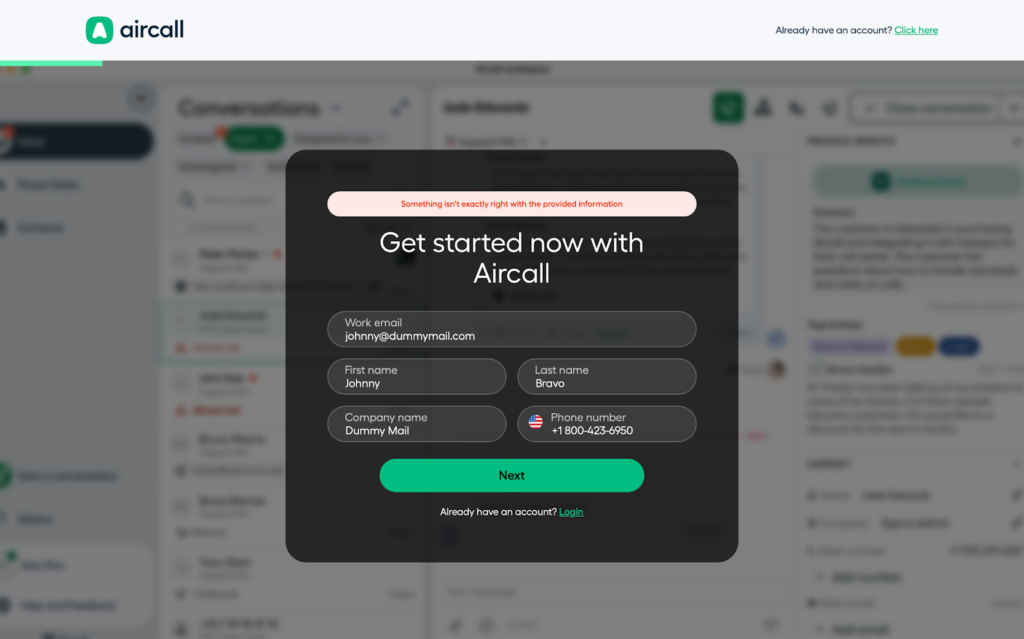
Based on our observation – Aircall runs automated domain validation before a human operator sees any lead. Personal email addresses (Gmail, Yahoo) are not allowed. Unknown domains do not allow the lead to proceed further.
- Mechanism: automated, invisible to the user
- Outcome: sales team receives pre-validated leads only
- Why it may be designed this way: Aircall’s buyer is a growth-stage B2B team — personal emails are almost never the target customer
VirtualPBX — Commitment Filter (Payment Gate)
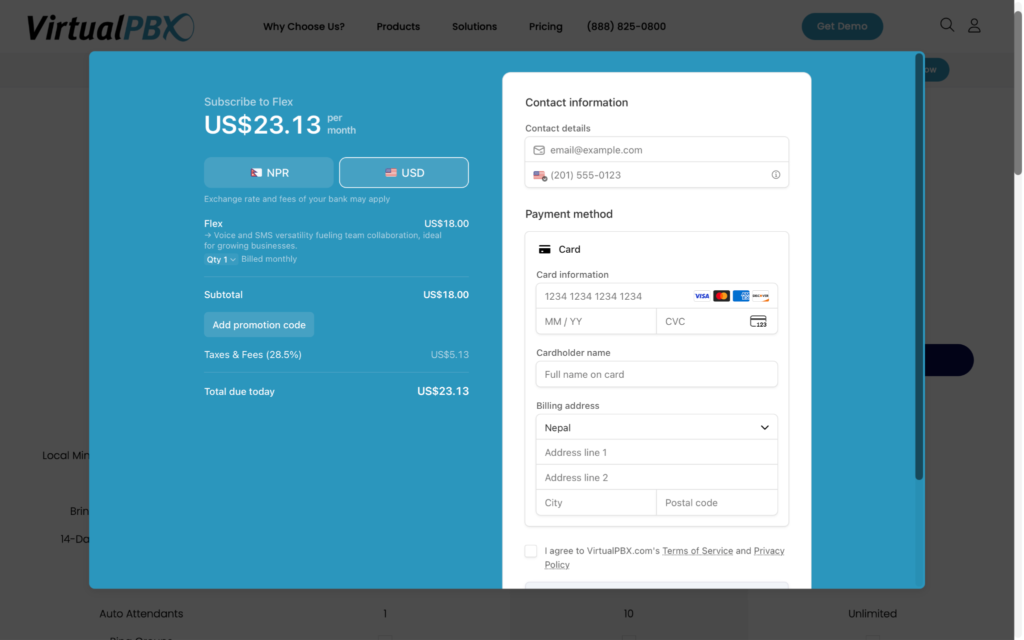
We observed that VirtualPBX requires payment before account provisioning. The subscription begins at signup — no free trial, no card-on-file delay.
- Mechanism: hard commitment gate — the hardest in this group
- Trade-off: turns away users who need a trial to decide; accepts this cost deliberately
- Why we think it works: their buyer has budget authority and a specific operational need — no trial needed to decide
CloudTalk — Intent Signal
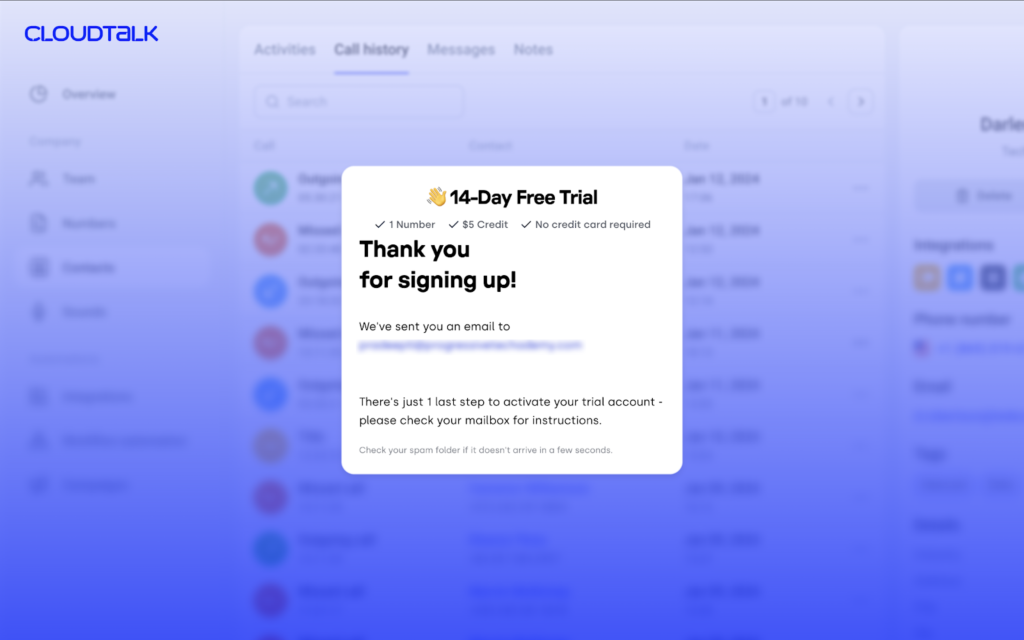
From our observation, CloudTalk collects business information (company name, team size, role) early in onboarding via email. What feels like personalisation setup to the user is qualification data for the sales team.
- Mechanism: passive — no visible gate, just contextual email
- Dual output: qualifies the lead AND personalises the downstream experience
- Why we think it works: users who email in real business data have already mentally committed to the product
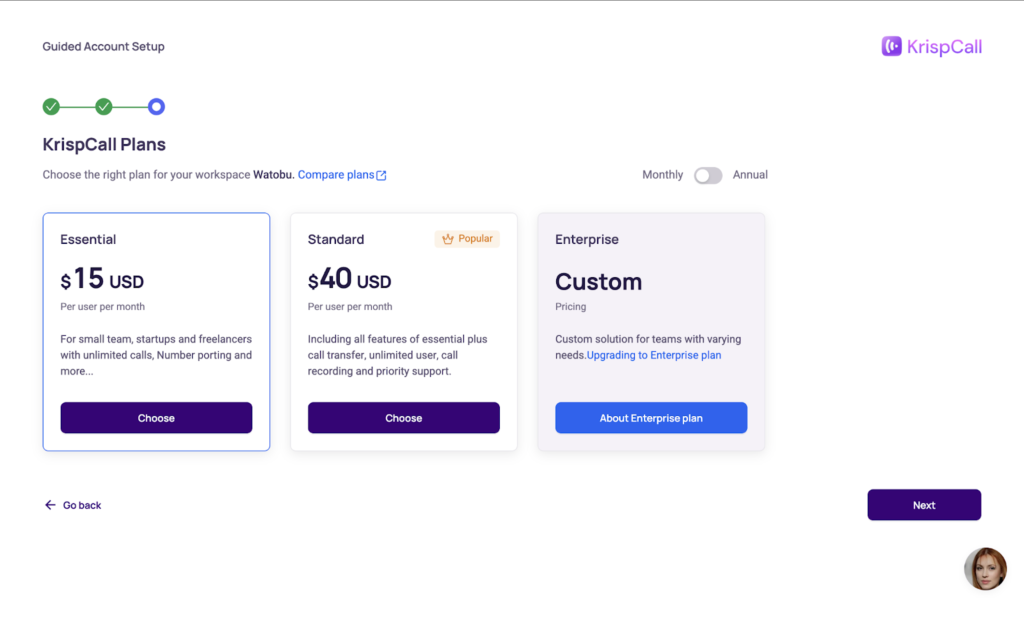
KrispCall — Commitment Filter (Contact Capture)
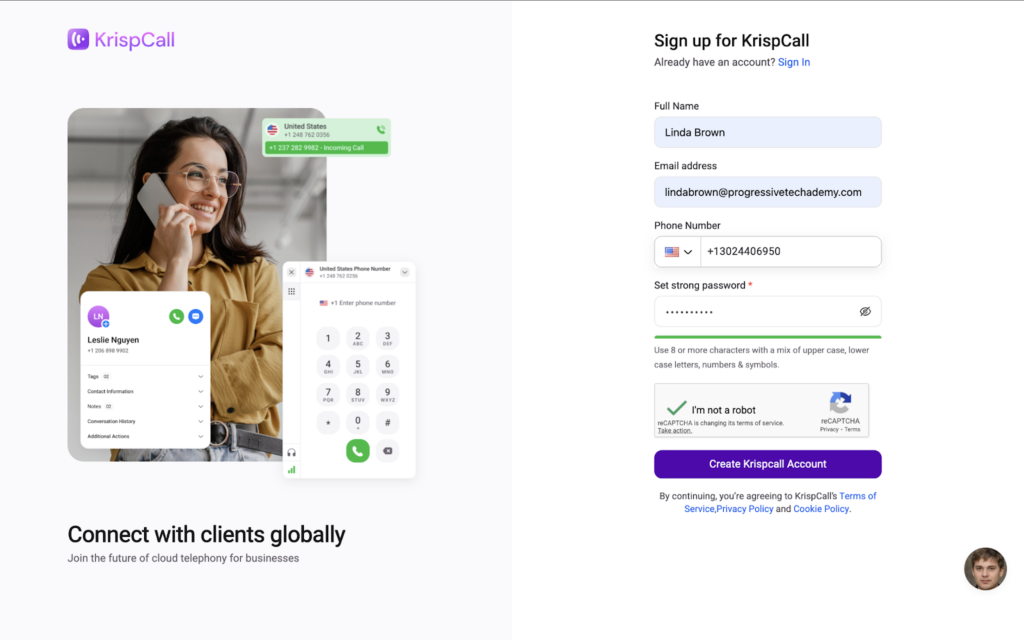
KrispCall captures email and phone number before the user reaches any payment screen. No automated domain scoring — the commitment signal is the act of providing real contact details.
- Mechanism: soft commitment gate — generates a reachable lead before payment
- Contrast with Quo: same surface mechanism, no silent validation layer
- Why it works: a user who provides a real phone number has opted into a sales relationship
Grasshopper — Passive Geographic Filter
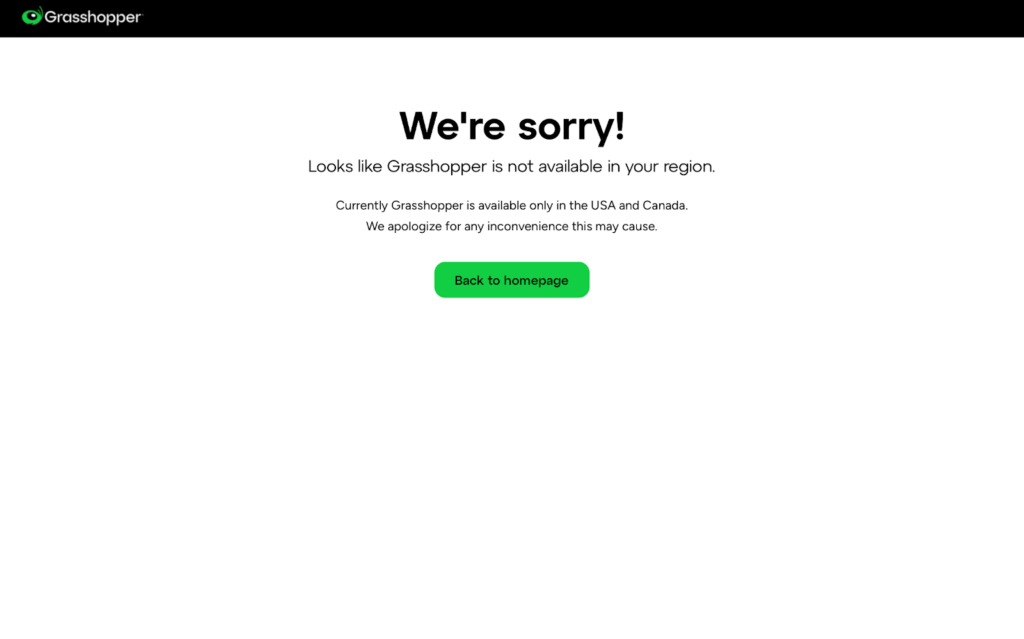
Grasshopper appears to be a US/Canada-only product by design. Geographic scope seems to passively filter non-target users before they reach the signup screen — no gate required.
- Mechanism: structural — built into product positioning, not the onboarding flow
- Key insight: qualification doesn’t always require an active mechanism
- The broader lesson: positioning and messaging could do qualification work before the flow even begins
Mechanism Reference Table
Based on the intent of these onboarding flows; primarily to identify the prospect, gauge their commitment and intent and to filter the users we’ve created four mechanisms for reference. The four qualification mechanisms used across the group — mapped to how they work, when to use them, and who uses them.
| Mechanism | How we think it works | Best for | Companies using it |
|---|---|---|---|
| Identity gate | Validates who the user is — domain check or human review | High-intent B2B, preventing low-quality signups | Aircall, Nuacom |
| Commitment filter | Requires user to put something at stake before access | High-ACV products where unqualified leads are costly | VirtualPBX, KrispCall |
| Intent signal | Collects business data that self-selects serious buyers | Mid-market SaaS with personalisation downstream | CloudTalk |
| Passive filter | Product positioning filters non-target users upstream | Products with a tightly defined geographic/ICP scope | Grasshopper |
Qualification vs Friction — Quadrant Analysis
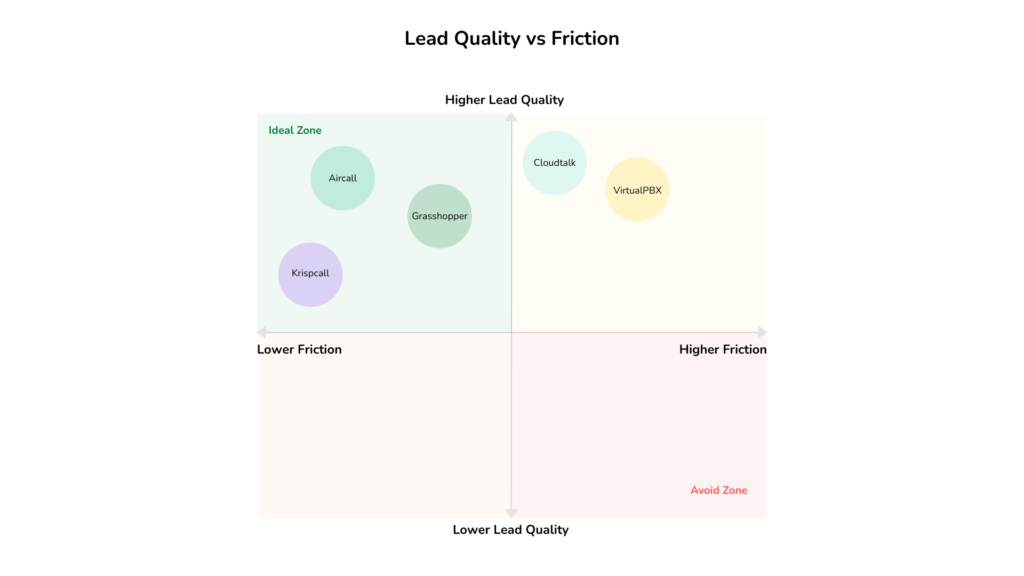
The chart below plots each company on two axes: lead qualification strength (vertical) and onboarding friction (horizontal). The ideal zone is top-left — high qualification, low friction. VirtualPBX sit top-right: strong qualification but higher friction, justified by their buyer profile.
Quadrant summary:
| Low friction | Medium friction | High friction | |
|---|---|---|---|
| High qualification | Aircall, Grasshopper | KrispCall, CloudTalk | VirtualPBX, Nuacom |
| Low qualification | Open signups, no gate | Form-heavy, no filter | Worst outcome: friction + bad leads |
Note: ‘High friction’ is not inherently bad. VirtualPBX and Nuacom intentionally operate there because the cost of a bad-fit lead in their market outweighs the cost of a higher drop rate.
Where Qualification Occurs in the Flow
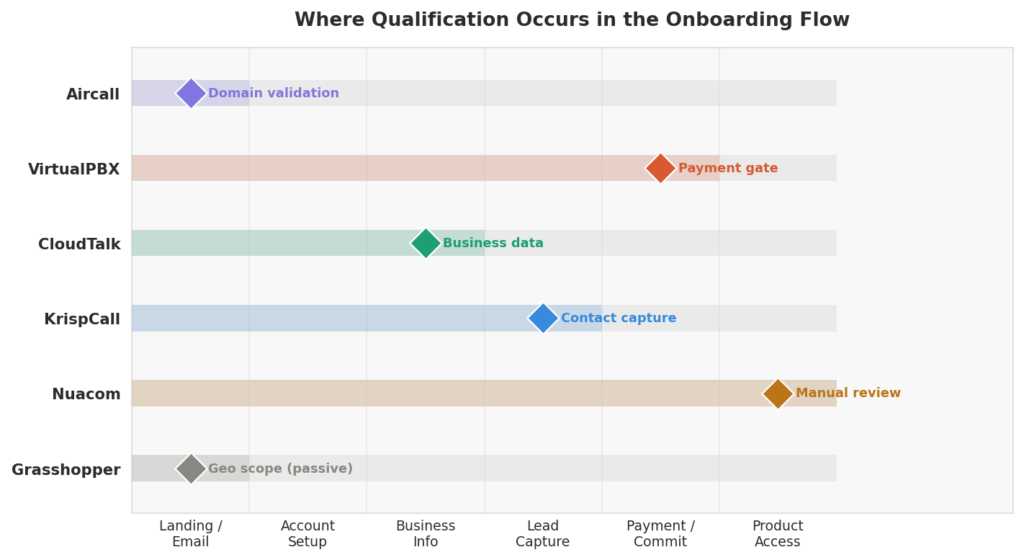
This chart maps the point in the onboarding flow where each company’s primary qualification checkpoint fires — from landing page to product access.
Key takeaway:
- Aircall and Grasshopper qualify at step 1 — before the flow begins
- KrispCall qualifies at step 4 — before payment, after initial setup
- VirtualPBX qualifies at step 5 — payment is the gate
- CloudTalk qualifies at step 3 — business data as the intent signal
The earlier the qualification checkpoint, the lower the cost of filtering — but the harder it is to execute without increasing drop rates for the right users. Aircall solves this with automation. Grasshopper solves it with positioning.
The 3 Patterns Behind All 5 Flows
1. Qualification at the identity layer, not the sales layer
In every flow, the qualification mechanism sits inside the product — not in a CRM or sales sequence. By the time a lead reaches a human, it has already been assessed.
2. Friction placed after value delivery, not before it
Every mechanism introduces friction — the question is where. Flows that front-load friction see higher drop rates. Flows that place friction after the user has a reason to proceed see higher completion rates among qualified users.
3. Lead data as a byproduct of onboarding, not a gate in front of it
None of these mechanisms feel like qualification to the user. Aircall’s domain check is invisible. CloudTalk’s form feels like a two-step verification. KrispCall’s contact capture feels like account creation. The best flows qualify without the user noticing.